Your Mama says to keep your teeth nice, your hair nice, and your skin nice—but did she ever tell you to keep your credit score nice?
I grew up the oldest of eight in humble circumstances. My mom was an immigrant and didn’t believe in credit cards; she only believed in making things work with what we had. Because of that, when it came time for me to go to college, I couldn’t even get a student loan because she didn’t have a credit score to co-sign for me. That was my first wake-up call that credit scores are a big deal.
But even then, I didn’t truly understand how to “keep them nice.” Years later, I thought I was doing the “right” thing: I got my financial ducks in a row, paid off my credit card in full, and then GASP, I closed the account. I thought I was being responsible! I didn’t realize until many years later, during my divorce, when I was trying to rent an apartment, that closing that account was a massive error.
If you’ve been avoiding your score because you’re scared of what’s under the hood, stop right there. You have to know your starting point to see your progress. Let’s talk about how to move that needle fast.
Why Your Score is Your “Financial Passport”
Think of your credit score as your report card to lenders. The higher the number, the more doors open: better interest rates, easier apartment approvals, and lower insurance premiums.
Here is a number that will fire you up: a difference of just 50 points can mean paying thousands more in interest over your lifetime. That is your money—money that should be staying in your pocket to help you build wealth!
What Actually Moves the Needle?
Listen, if you want to see that number climb, the secret is simple: When you get your financial ducks in a row, you automatically start doing the things the credit bureaus are looking for you to do. It’s not about memorizing a bunch of complicated rules; it’s about the fact that once you have a solid foundation and you’re finally speaking the “language of money,” your credit score starts to reflect that newfound organization. I teach the specific tricks for this in my Before Investing course, and we’ve seen it work time and time again to get my participants’ scores up! When your ducks are in line, your score naturally follows. We focus on the big moves that shift your results the fastest so you can stop guessing and start knowing.
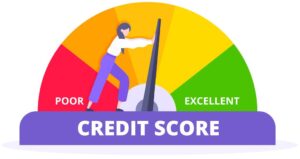
How to Improve Your Credit Score Fast: Get your financial ducks in a row, and your credit score falls in line
1. Pull Your Free Credit Report and Hunt for Errors
This is your starting line, and it is free. Head to AnnualCreditReport.com and pull reports from all three bureaus: Equifax, Experian, and TransUnion. You are looking for anything that does not belong: accounts that are not yours, payments marked late that you made on time, and debts you already paid showing as open collections.
The FTC(Federal Trade Commission) has found that 1 in 5 consumers has a verifiable error on at least one credit report. One dispute letter can potentially move your score 25 points or more. File disputes directly with each bureau online; they are required to investigate within 30 days. This is one of the fastest credit score fixes available to you and it costs nothing.
2. Set Up Autopay for Every Bill You Can
Payment history is a large part of your score and one missed payment can sit on your credit report for seven years. That is a long time to pay for one forgotten due date. Set up autopay for at minimum the minimum payment due on every account. You can pay more when you have it. But the autopay is your safety net so your score does not take a hit over a busy week.
Bonus tip: Some platforms like Experian Boost may allow you to get credit for on-time utility, phone, and streaming payments you are already making. It is worth exploring whether your accounts qualify.
3. Become an Authorized User on a Trusted Account
If someone in your life has a credit card with a long history of on-time payments and low utilization, ask them to add you as an authorized user. You do not need to use the card. Their good history may appear on your credit report and give your score a lift. This works best when the primary cardholder has a strong track record, so choose wisely.
4. Do Not Open New Accounts You Do Not Need
Every time you apply for new credit, it triggers a hard inquiry on your report, which can temporarily dip your score. It also lowers your average account age. While you are in improvement mode, resist the urge to open new cards or apply for new loans unless it is absolutely necessary. Stay focused on the accounts you already have.
The Reality Check: Your Timeline
I’m going to give it to you straight: there is no overnight 200-point miracle. If someone promises that, they aren’t being truthful.
- Within 30 Days: You might see movement from error disputes or lowering your balances.
- 60-90 Days: Consistent on-time payments start to show their magic.
- 6-12 Months: This is where the real “glow up” happens and you see meaningful recovery.
Your Credit Score Is a Financial Duck
Getting your Financial Ducks in a row before you start investing is everything. Your credit score is one of those ducks. A strong score means lower interest rates on debt, which means more of your money stays in your hands instead of going to a lender. And that freed-up money? That is what eventually fuels your wealth-building journey.
Credit repair is not separate from your financial plan. It IS your financial plan in the early stages. It is the foundation you build everything else on top of.
The Bottom Line
At HerFinIQ, your credit score is one of your essential Financial Ducks. It’s not separate from your wealth journey; it is the result of getting your financial ducks in a row. A strong score means you pay less to lenders and keep more for your future self to invest.
You don’t need to be a “finance person” to do this. You just need a plan and the willingness to look at the number. I’ve been where you are, and I promise you: once you understand how it works, you stop being afraid of it.
This is not about being perfect. It is about being consistent. And consistent? That is absolutely something you can do.
TOGETHER, BUILDING WEALTH.


GET MONEY SMART

Your Financial Freedom Starts Here
Courses + Workshops

LIKE & FOLLOW